
Running a Restaurant in Tanzania — Software & Operations Guide
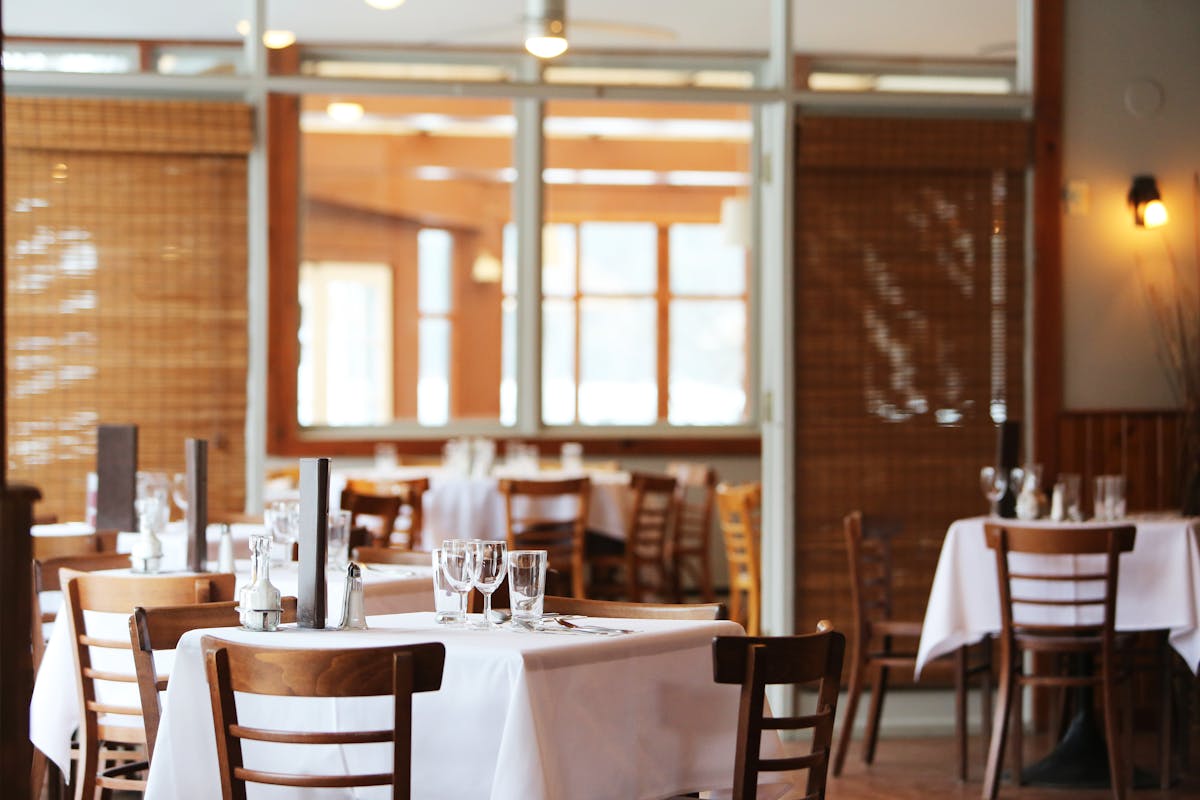
Running a restaurant requires coordinating multiple moving parts. The right POS system ties everything together.
Restaurant POS Requirements
- Table management – Track which tables are occupied
- Kitchen display – Orders go directly to kitchen
- Menu modifiers – Extra toppings, special requests
- Split bills – Divide payment between customers
- Tips handling – Track and report tips
Workflow: Order to Payment
- Waiter takes order on tablet or POS
- Order prints in kitchen automatically
- Kitchen marks items as ready
- Food served to table
- Customer requests bill
- VFD receipt generated
- Payment processed
Inventory for Restaurants
Restaurants need ingredient-level tracking:
- Track raw ingredients, not just menu items
- Recipe costing to know true profit
- Daily usage tracking
- Wastage monitoring
Key Reports
- Sales by menu item – What sells best
- Peak hours – When to staff up
- Table turnover – Efficiency metrics
- Food cost percentage – Profitability
Staff Management
- Different access levels for waiters, managers
- Individual logins for accountability
- Sales by server reports
- Shift handover procedures
Tawala for Restaurants
- ✅ Table and floor plan management
- ✅ Kitchen printer integration
- ✅ TRA VFD compliance
- ✅ Split bills and tips
- ✅ Menu item reports
Food cost is where Tanzanian restaurants actually lose money
Table management and kitchen printers are the visible part of restaurant software, and they matter. But the reason a busy Dar es Salaam restaurant can run full every evening and still not pay its owner is almost always the same: nobody knows what a plate costs, because the inputs were bought at a different price every week and nobody recosted the menu.
That is a specifically Tanzanian problem. A restaurant here typically buys fresh produce daily or every other day from Kariakoo, Kisutu, Buguruni or a local market at whatever this morning's price is; buys dry goods monthly from a wholesaler on short credit; and buys beverages from a distributor on a route schedule. Three different purchasing rhythms, three different price behaviours, and one menu price that was set eighteen months ago.
Build a recipe card for every menu item
A recipe card is a costing document, not a chef's instruction. For each menu item, it lists every input, the quantity used as purchased, and the current buying price. Two details separate a useful recipe card from a decorative one:
- Cost the yield, not the purchase weight. A kilo of whole tilapia is not a kilo of served fish. If you trim, bone, peel or reduce, the usable fraction is what your dish consumes, and the cost per served portion has to carry the waste. Weigh the trim once for each major protein and vegetable and fix the yield percentage; it does not change much, and getting it wrong understates food cost on exactly your highest-volume dishes.
- Include the small things. Cooking oil, charcoal or gas, salt, packaging for takeaway, the plastic bag, the toothpick. Individually trivial; collectively several percentage points of margin on a nyama choma plate.
Once every item has a card, food cost percentage per dish becomes visible — and it will not be uniform. Some dishes will be running at a fraction of what you assumed, and they will usually be the popular ones, because popularity is often price-driven. Use the markup vs margin calculator to keep the arithmetic honest: a 50% markup on food cost is only a 33.3% margin, and pricing a menu on markup while budgeting on margin is a reliable way to lose money while feeling profitable.
Reprice on a schedule, not on a shock
Because input prices move constantly, a menu needs a review cadence rather than an annual event. A workable rhythm: recost the ten highest-volume dishes monthly against actual purchase prices, and the full menu quarterly. When a dish drifts past your target food cost, you have four moves — change the portion, change the specification, change the price, or take it off the menu — and it is far better to make that choice deliberately in month two than in a panic when the year's accounts arrive.
Before changing a price, run the volume consequence. Our break-even calculator frames the question the right way round: if you drop a price by 10%, how many more covers must you serve simply to stand still? For a restaurant with a low contribution margin, the answer is often a number the kitchen physically cannot produce.
The bar is a separate business with a separate variance
Beverages behave nothing like food. Stock is countable, unit values are high, theft is easy and variance is measurable to the bottle — which makes the bar the one part of a restaurant where you can get near-perfect control if you choose to.
- Count the bar every night at close, not weekly. Opening stock plus receipts minus closing stock equals consumption; consumption times selling price equals expected revenue; the gap between expected and actual bar revenue is your variance.
- Investigate variance the next morning, while the shift is identifiable. A weekly count tells you that you lost money; a nightly count tells you which shift.
- Fix the pour. Free-pouring spirits creates variance that no software can recover. A jigger and a written pour standard cost almost nothing.
- Handle staff and management drinks as zero-price sales, rung through the till. If they are not recorded, they show up as theft in the variance and you will chase the wrong problem.
- Match distributor deliveries against empties where you trade on returnable crates — this is where a surprising amount of money quietly disappears.
Fiscal compliance: bars and hotels are designated sectors
If your establishment serves alcohol, or if it offers accommodation, you are in a sector that requires a fiscal device regardless of turnover — bars and hotels are on the designated list alongside fuel stations, pharmacies, hardware and private schools. Our EFD/VFD eligibility checker confirms whether it applies to your establishment and sets out the registration deadline and what it costs to trade without a device.
If you also let rooms, two sector levies sit on top of standard 18% VAT: the Hotel Levy at 1.5% of net accommodation revenue, and a Bed-night Levy of USD 1.00 per occupied bed-night, paid in shillings at the prevailing rate. The Hotel Levy is filed monthly with the VAT return by the 20th of the following month. Our hotel levy calculator computes both and notes that some regional councils add a Tanzania Tourism Confederation Levy of 1%.
Practically, this means the bill the customer receives at the table must be the fiscal receipt. Splitting a bill four ways should produce four fiscal receipts, not one fiscal receipt and three handwritten notes — and that requirement should be on your checklist when you evaluate any POS, because plenty of systems handle splits badly. The nightly Z report then closes the trading day and gives you the number to reconcile against the cash drawer, the mobile-money till and the card terminal.
Shift discipline: floats, tips and mobile money
Restaurant cash handling in Tanzania has a specific complication — a large share of payment arrives by M-Pesa, Tigo Pesa or Airtel Money, often to a till that a supervisor holds, and reconciling that against the POS is a nightly task rather than a monthly one. A workable close-out:
- Hand over a float that two people have counted and both signed for. A float nobody counted makes every number that follows unprovable.
- Balance each tender against the fiscal totals on its own: notes and coins first, then each mobile network in turn, then the card terminal. Combine them and a drawer shortfall simply disappears behind an electronic overage, where you will never find it.
- Record tips explicitly and settle them on a published rule. Undocumented tips are the most common cause of till disputes.
- Check merchant fees against your expectation, not just the payout. Collection fees on merchant payments are a real cost of sale — the mobile money fee calculator gives indicative rates by network and transaction type.
Assume the power will go
A restaurant cannot stop serving because TANESCO went out mid-service or the router dropped. Any POS you adopt has to keep taking orders and closing bills offline, then submit queued fiscal receipts when the connection returns. Test it before go-live rather than during a Friday service: cut the connection, run three tables from order to payment, restore the connection, and confirm each appears once — exactly once — in the day's fiscal totals. Systems that duplicate offline transactions will silently overstate your sales and your tax.
The weekly numbers that run a restaurant
- Food cost percentage, actual versus theoretical from the recipe cards. The gap is waste, over-portioning or theft.
- Beverage variance by shift — the single most actionable control number you have.
- Covers and average spend per cover, by day part. A quiet Tuesday lunch and a full Saturday need different decisions.
- Sales mix by menu item. High-margin dishes that nobody orders are a menu design problem, not a kitchen problem.
- Labour cost as a share of sales, by day, so rostering follows demand rather than habit.
For how these workflows are configured for a Tanzanian restaurant, bar or lodge, see the Tawala for hospitality page and the POS module. If you are opening rather than optimising, our POS setup guide covers the go-live sequence.
Streamline Your Restaurant Operations
Tawala connects your floor to your kitchen seamlessly.
Get Started →